Gondola shelving is still the backbone of most brick-and-mortar retail layouts. If you're a distributor, store planner, or retail buyer sourcing fixtures from a factory overseas, the real risk isn't price—it's getting the wrong specification. A 24-inch base shelf where you need an 18-inch one, or a 20-gauge upright where you need 18-gauge, will kill your margin before the container even hits port.
This guide breaks down the standard sizes, material choices, and load ratings you need to verify on every PO. We'll also give you the exact questions to ask your supplier so you catch problems before production starts.
What Is Gondola Shelving?
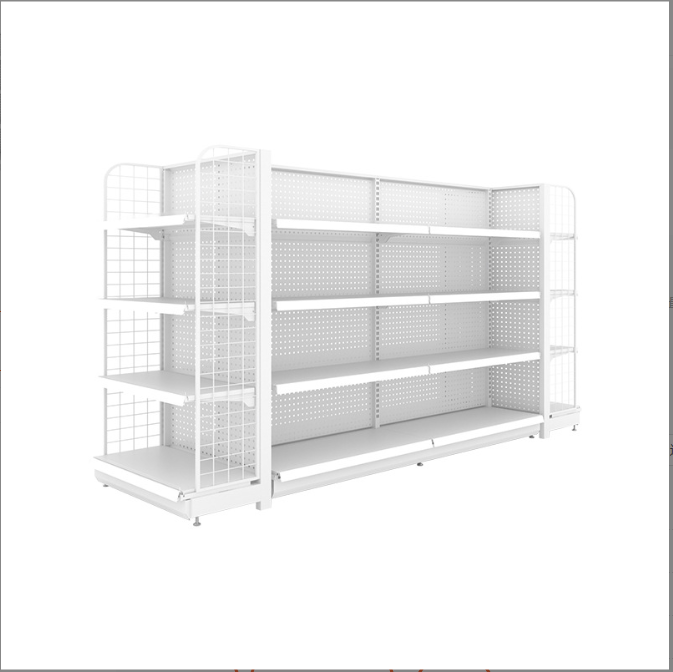
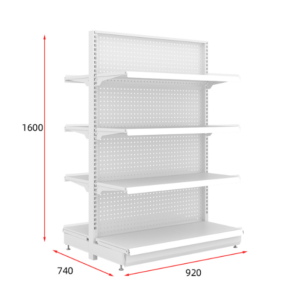
Gondola shelving is a freestanding, double-sided retail fixture with a central upright, base deck, and adjustable shelves. It comes in two configurations:
Single-sided: Mounts against a wall (often called wall units).
Double-sided: Sits in the center of an aisle.
Most units ship as knock-down (KD) kits to save freight volume, then bolt together on-site. For U.S. retail—convenience stores, pharmacies, liquor stores, and general merchandisers—gondola remains the default because it is modular, adjustable, and easy to reconfigure.
Standard Gondola Shelving Sizes & Configurations
If your client gives you a floor plan, you need to match real industry standards. Here is what actually ships from the factory:
Widths
36 inches (914 mm) — the most common U.S. standard.
48 inches (1,219 mm) — used for wide-aisle merchandising.
Custom widths (30", 42", 60") are available but usually require a minimum order.
Heights
54 inches (1,372 mm) — typical for behind-counter or wall gondola.
60 inches (1,524 mm) — convenience store standard.
72 inches (1,829 mm) — general retail / liquor stores.
84 inches (2,134 mm) — maximum common height for retail gondola; requires seismic bracing in earthquake zones.
Shelf Depths
16 inches (406 mm) — general merchandise, packaged goods.
18 inches (457 mm) — convenience store CPG standard.
Most suppliers use 1-inch vertical adjustment increments (sometimes 2-inch on budget lines). Verify this in the spec sheet. Your installer will hate you if the pegboard holes don't line up with standard shelf clips.
Standard Accessories You Should Budget For
End caps: Marketing gold. End caps boost impulse sales by 30%+ on average. Make sure your supplier offers matching end-cap units.
Canopy / top shelves: Adds visibility for signage.
Kickplates: Protect the base from foot traffic and carts.
Peg hooks & wire baskets: Slatwall or pegboard backing required. Ask whether the gondola backing is slatwall, pegboard, or plain metal before you quote.
Materials & Load Capacity (The Engineering Part)
This is where most buyers get burned. Two suppliers can quote "steel gondola shelving" at wildly different prices because they are not quoting the same steel.
Uprights & Shelves
Cold-rolled steel is standard. Hot-rolled is cheaper but rougher; avoid it unless the client specifically accepts it.
Gauge: Retail gondola typically uses 20-gauge to 24-gauge steel for shelves. Heavy-duty applications (hardware, automotive fluids) need 18-gauge or thicker.
Finish: Powder coating over pre-treatment (iron phosphate) is the minimum standard for rust resistance. Epoxy powder coat offers better chemical resistance for pharmacy or pet-store environments.
Load Ratings (Per Shelf)
The following are typical industry benchmarks. Always verify with your supplier's static-load test report before production.
Shelf Depth
Light Duty (≤24 ga)
Standard Duty (22 ga)
Heavy Duty (18 ga)
16"
250–350 lb
400–500 lb
600–800 lb
24"
200–300 lb
350–450 lb
500–700 lb
Note: Shelf load ratings assume even weight distribution. Point loads (e.g., a single heavy box in the center) reduce effective capacity by 20–30%.
Base Deck
The base deck carries the heaviest load (often 1,000–1,500 lb on a 48" wide unit) because it supports stacked cases. Ask for a reinforced base deck if the client plans to stock cases of water, motor oil, or pet food.
6 Key Features to Check on the Spec Sheet
Shelf bracket type — Lozenge (diamond) brackets are standard in the U.S. market. Hook brackets are cheaper but less stable under load.
Backing type — Slatwall accepts heavier accessories; pegboard is cheaper but limits hook placement; plain metal backs are only for shelf-only merchandising.
Leveling feet — Essential for older floors. Adjustable feet with at least 1" range.
Color match across batches — Powder coat colors shift between batches. If you plan repeat orders, ask for a color reference chip (RAL or Pantone).
Seismic compliance — California and parts of the Pacific Northwest require seismic clips or floor anchoring. Confirm whether your supplier's upright profile accepts standard seismic hardware.
Packaging — KD kits should be packed with corrugated separators and edge protectors. One scratched face frame on a floor display unit = a claim.
Questions to Ask Your Supplier (Before You Wire the Deposit)
The answers to these questions separate a trading company from a real factory partner:
"What is the exact steel gauge and grade for uprights, shelves, and base decks?"
"Do you do in-house powder coating, or do you outsource finishing?"
"What is your shelf load test protocol—static load or dynamic load?"
"Can you supply a mill test certificate or material composition report?"
"What is your defect rate on powder coat finish, and what is your rework policy?"
"Do your gondola upright profiles match major U.S. retail shelving standards?" (This matters if your client already owns existing shelving and wants to mix new units.)
If the supplier cannot answer the last question with a specific profile drawing or compatibility confirmation, they are probably a broker, not a manufacturer.
Related Reading
If you are sourcing convenience-store or pharmacy fixtures, these guides will help you spec the right accessories:
Send us your floor plan or store concept. Our engineering team reviews every inquiry for load, layout, and accessory fit before we quote. No guesswork.